
Academic Entry; 2026
Fact or Fiction Magazine Spreads
Typographic hierarchy, ideation, visual communication
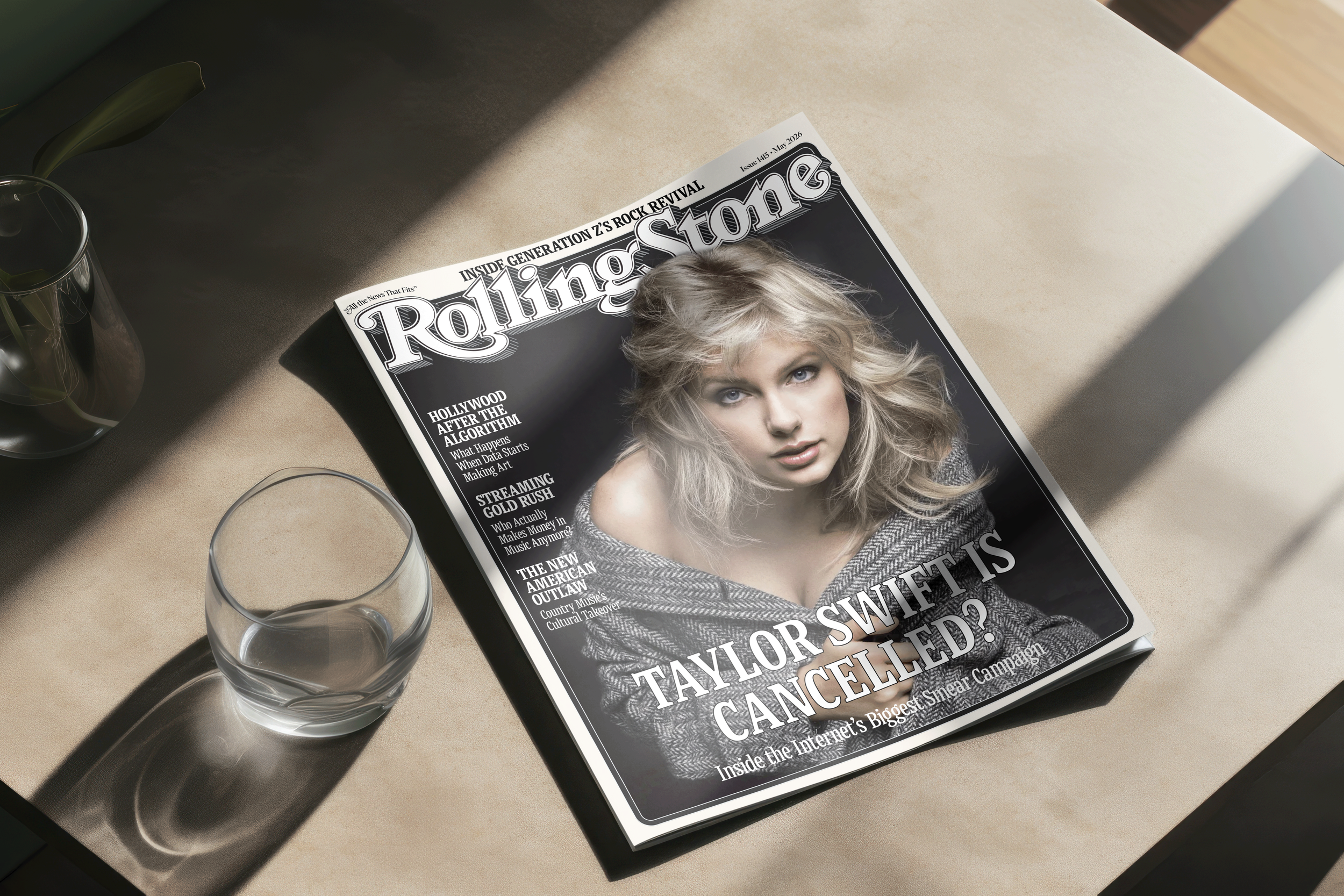

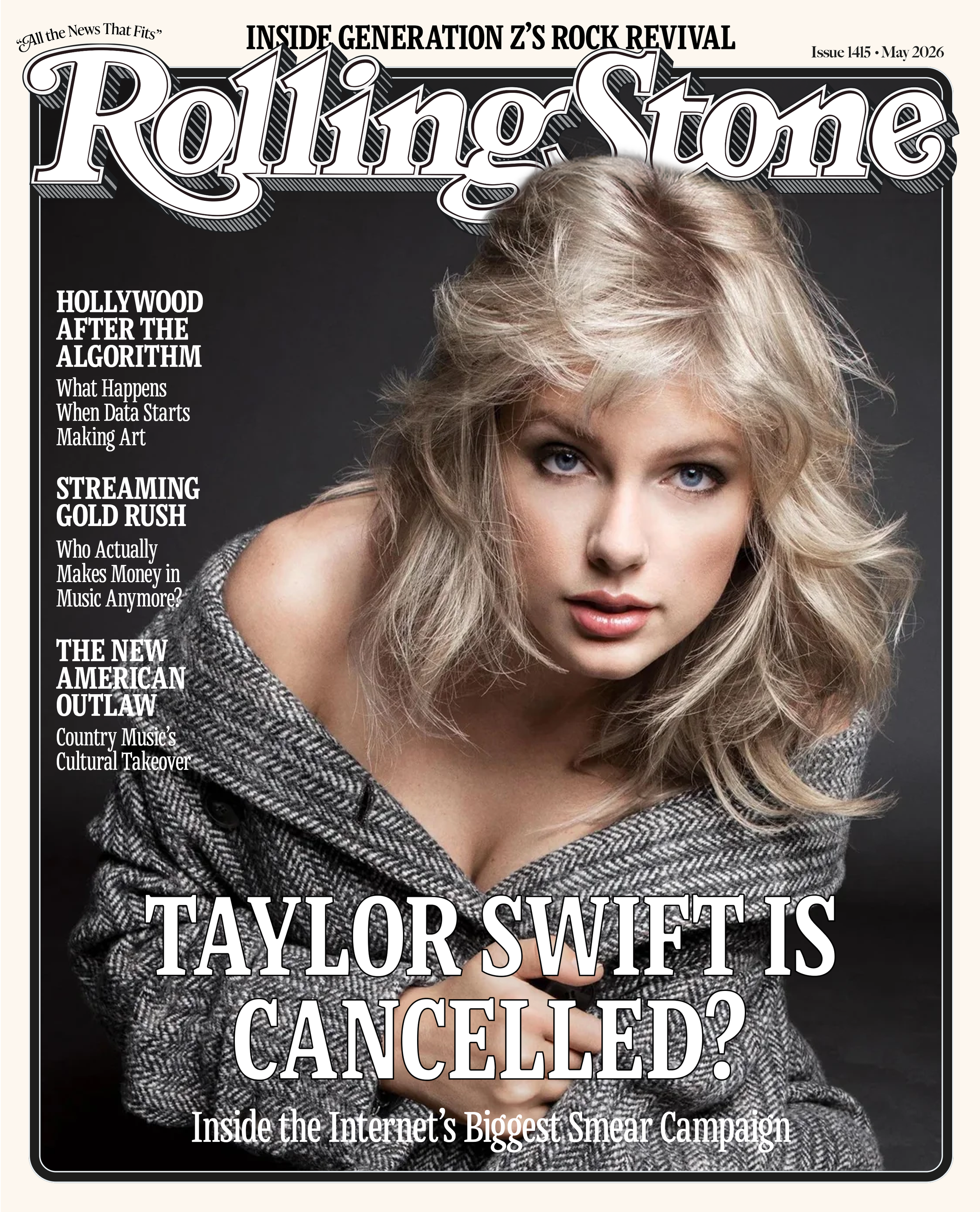
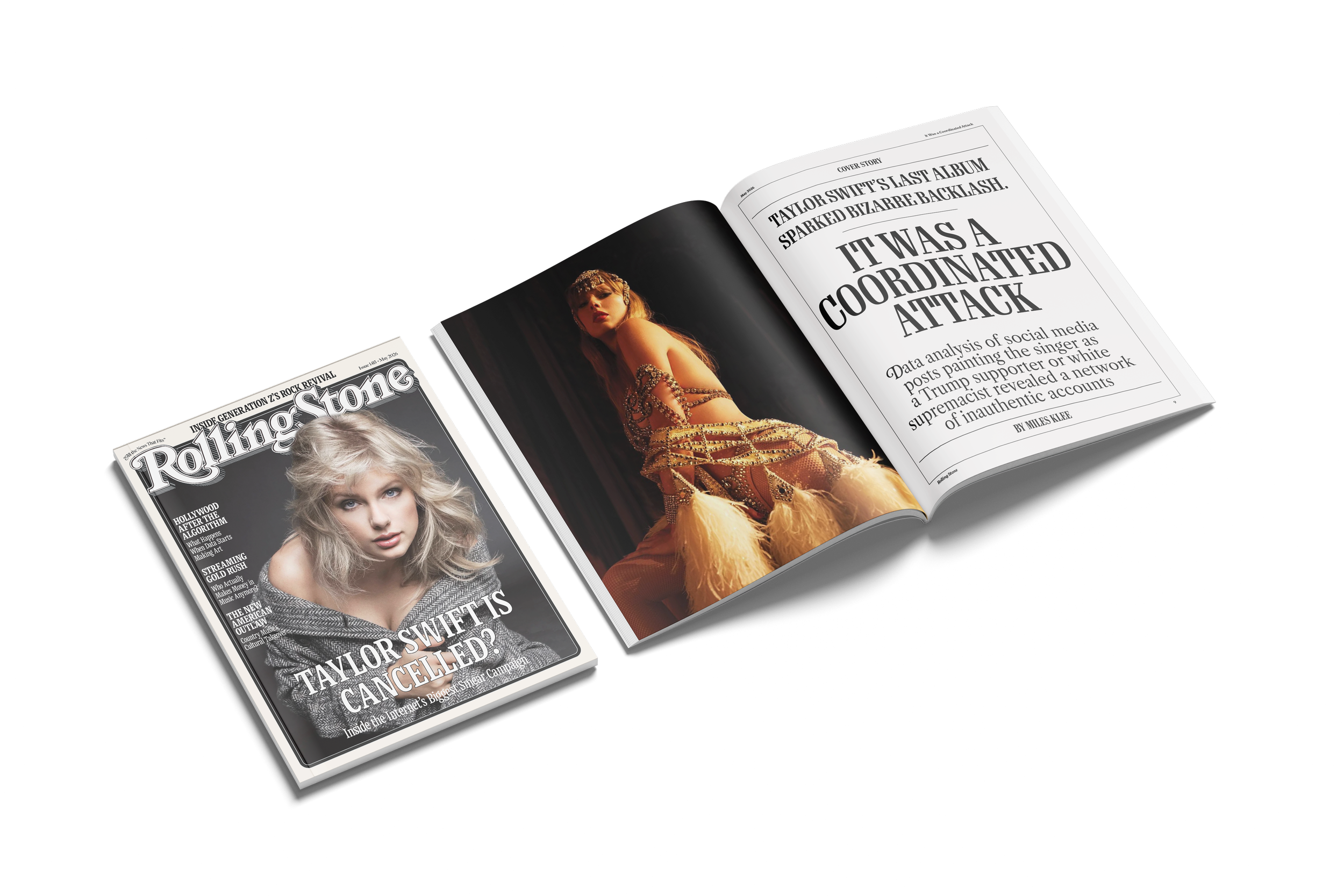
Fact
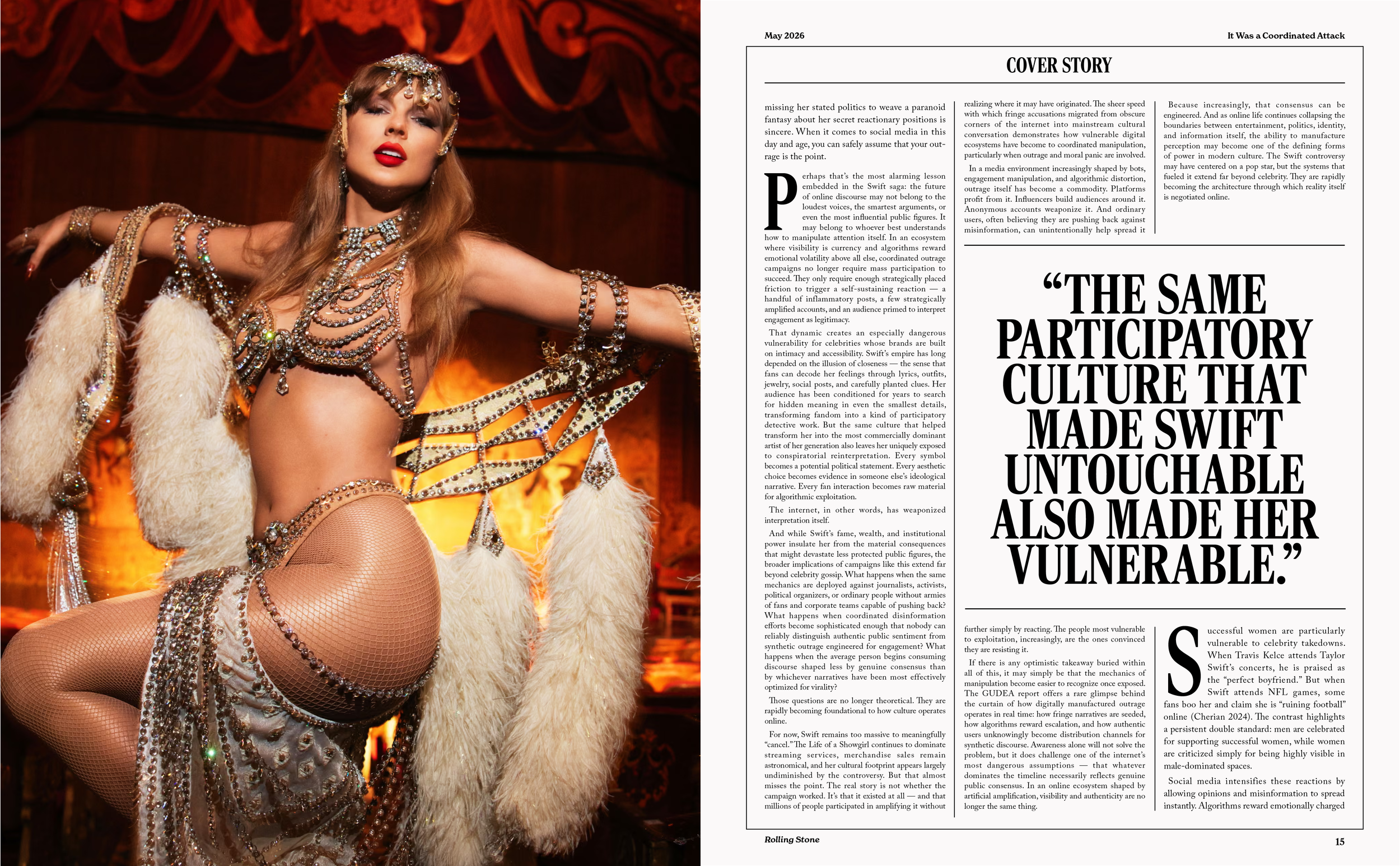
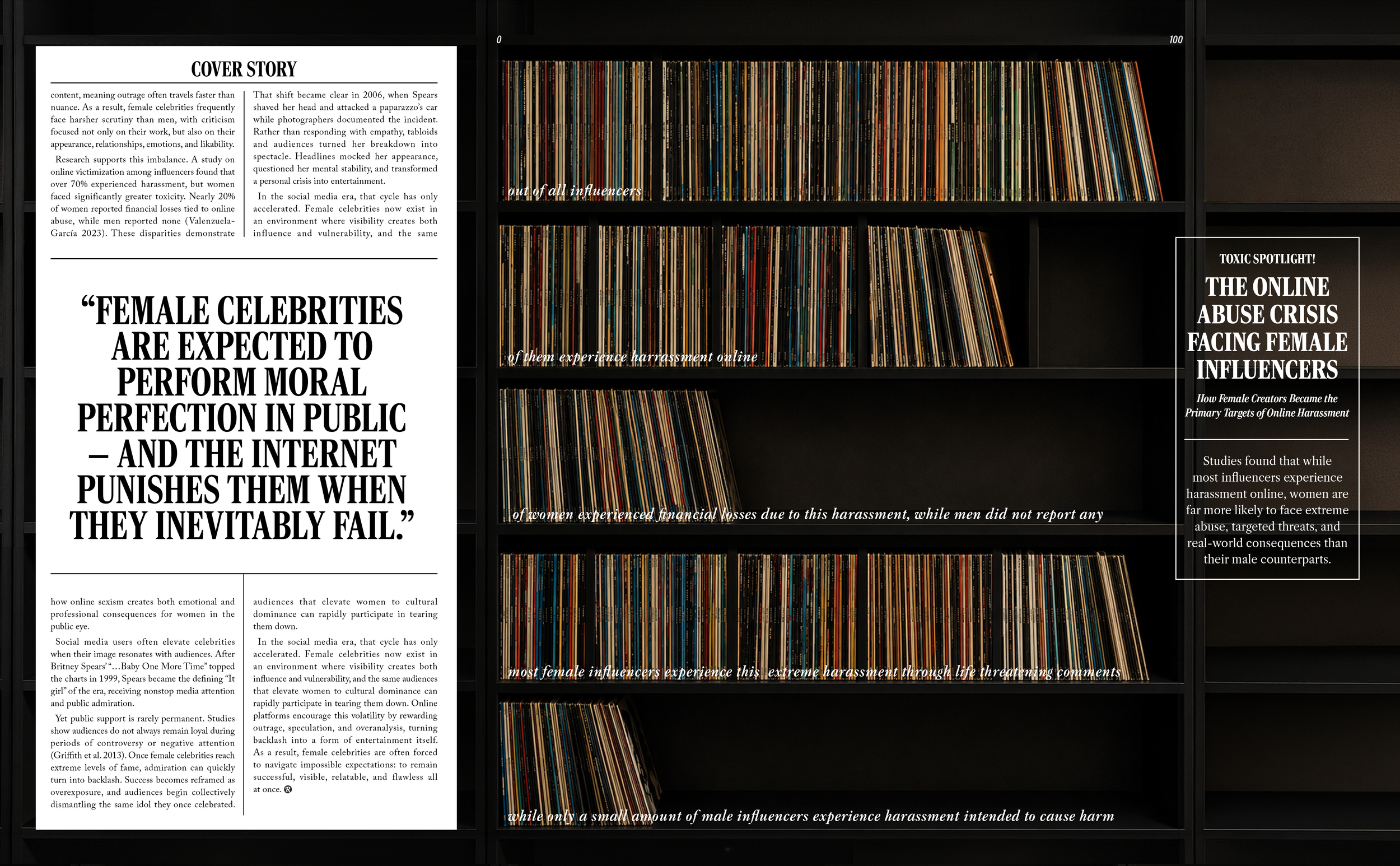
Taylor Swift Smear Campaign and the Entertainment Industry’s Double Standard
Pushed Narrative
How public opinion is shaped/manipulated through media narratives, gendered stereotypes, and amplification systems
Design Intention
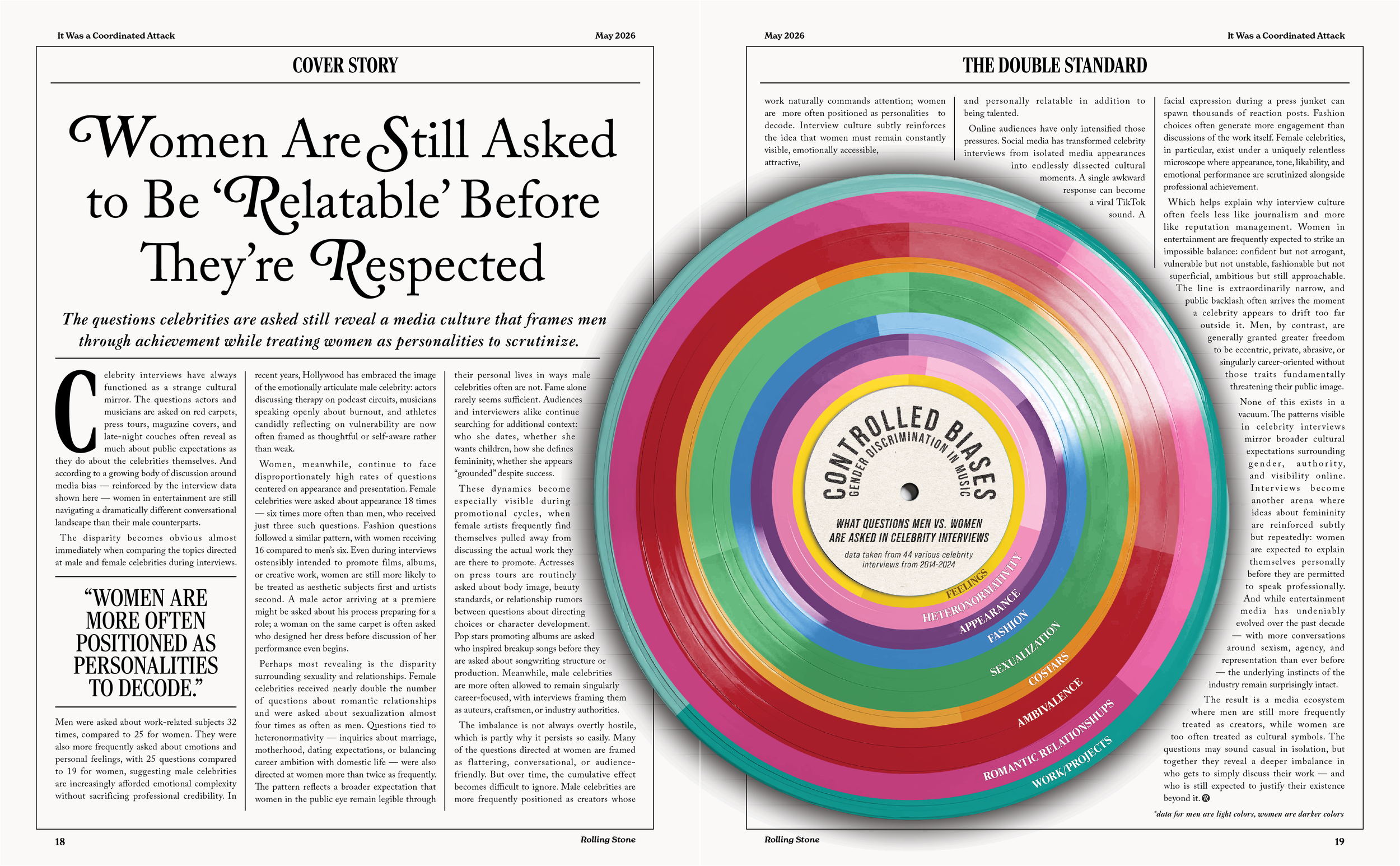
Show how young female music artists are unfairly targeted by smear campaigns and intense public criticism, encouraging audiences to think more critically about how media, online conversations, and cultural biases shape the way female celebrities are perceived.
Audience
Younger audiences (18-25) who actively engage with celebrity culture through social media, pop music fandoms, entertainment news, and online commentary, media critiques and pop culture journalists
Desired Behavior Outcome
Prompt audiences to question how and why certain stories about female artists gain traction; help viewers recognize recurring stereotypes used to discredit women; push audiences to evaluate sources, motives, and framing techniques behind entertainment coverage.
Case Studies and Data Used
Case Study 1
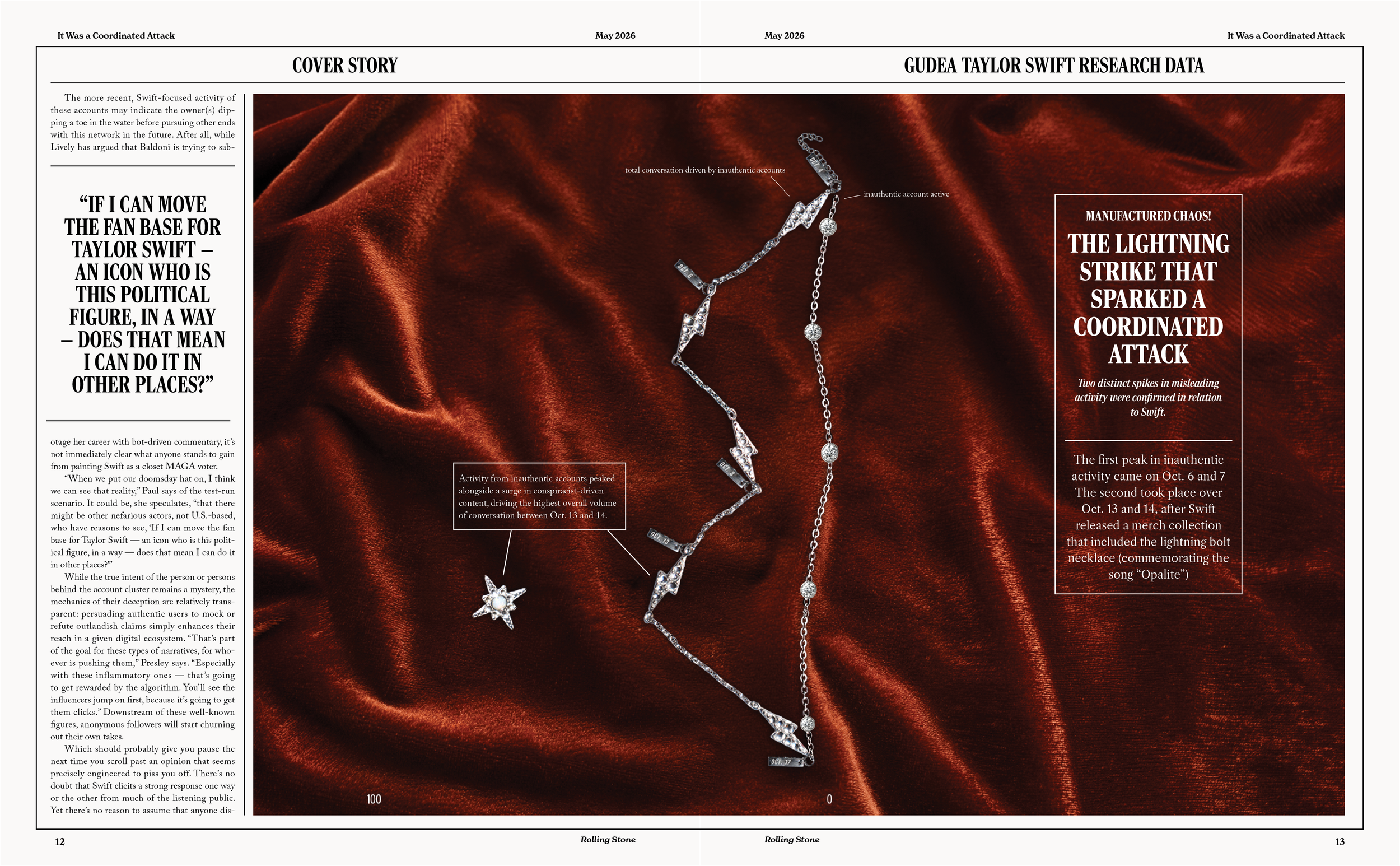
GUDEA Research of Taylor Swift Smear Campaign
Case Study 2
Examining Gender Differences in Celebrity Journalism Research Article
Case Study 3
Too Lucky to Be a Victim? Research Article
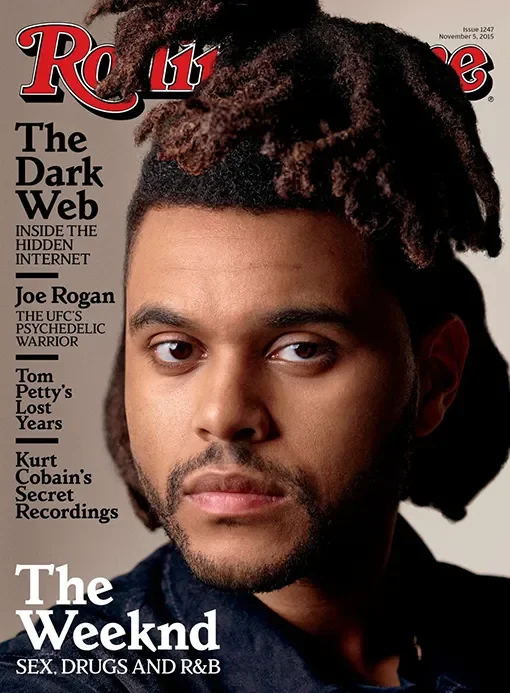
Conceptual Narrative
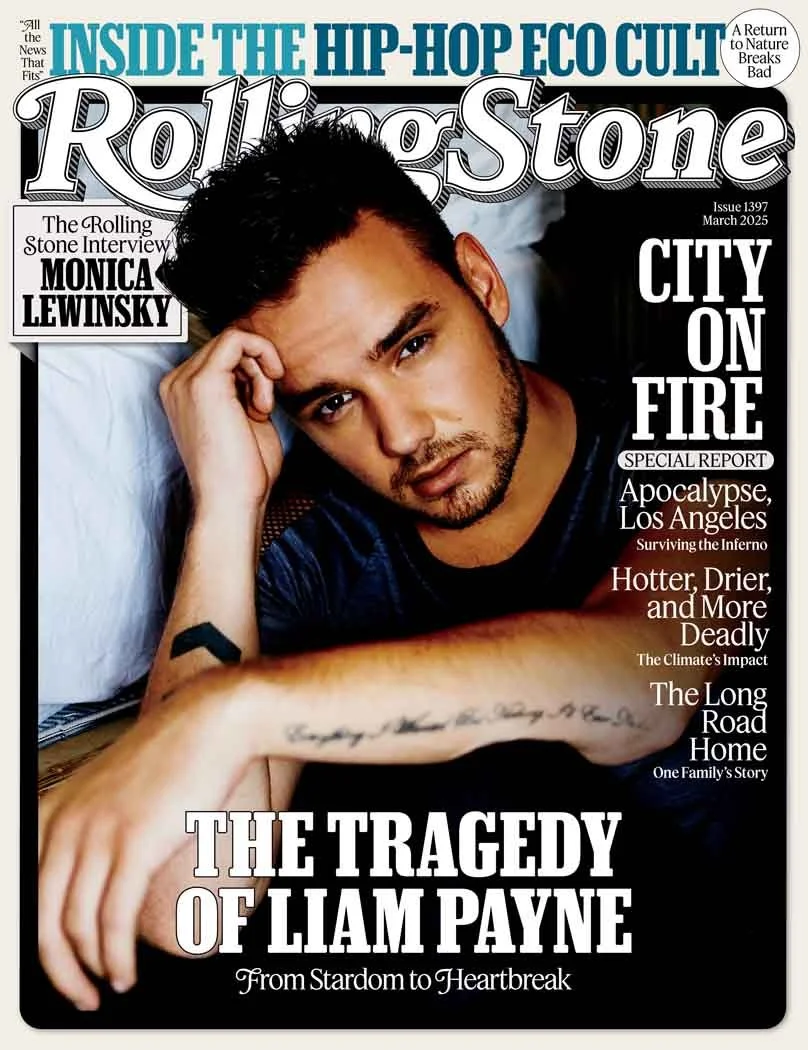
Rolling Stone magazine is one of the most reputable sources for reporting on the music industry or its malpractice.
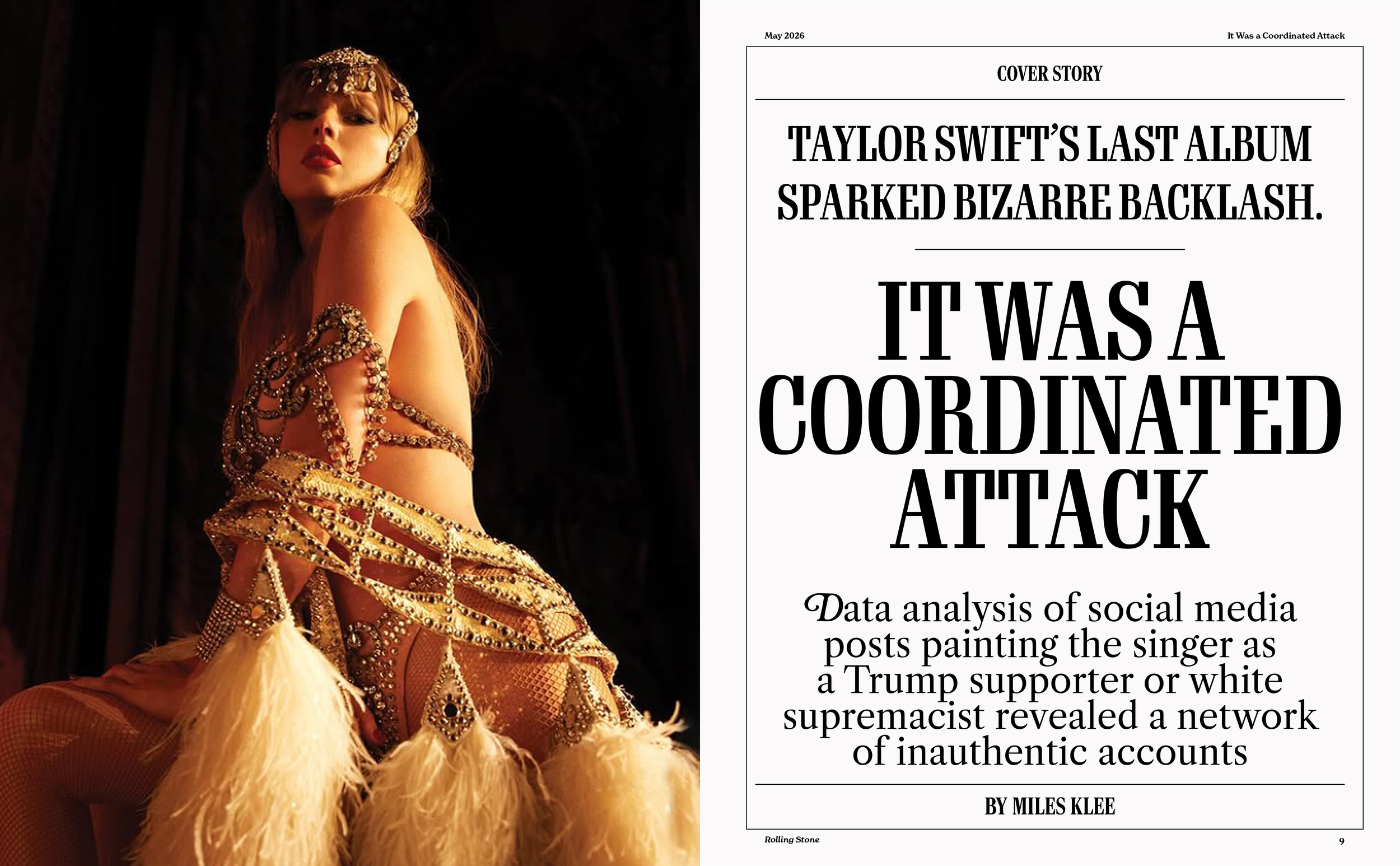
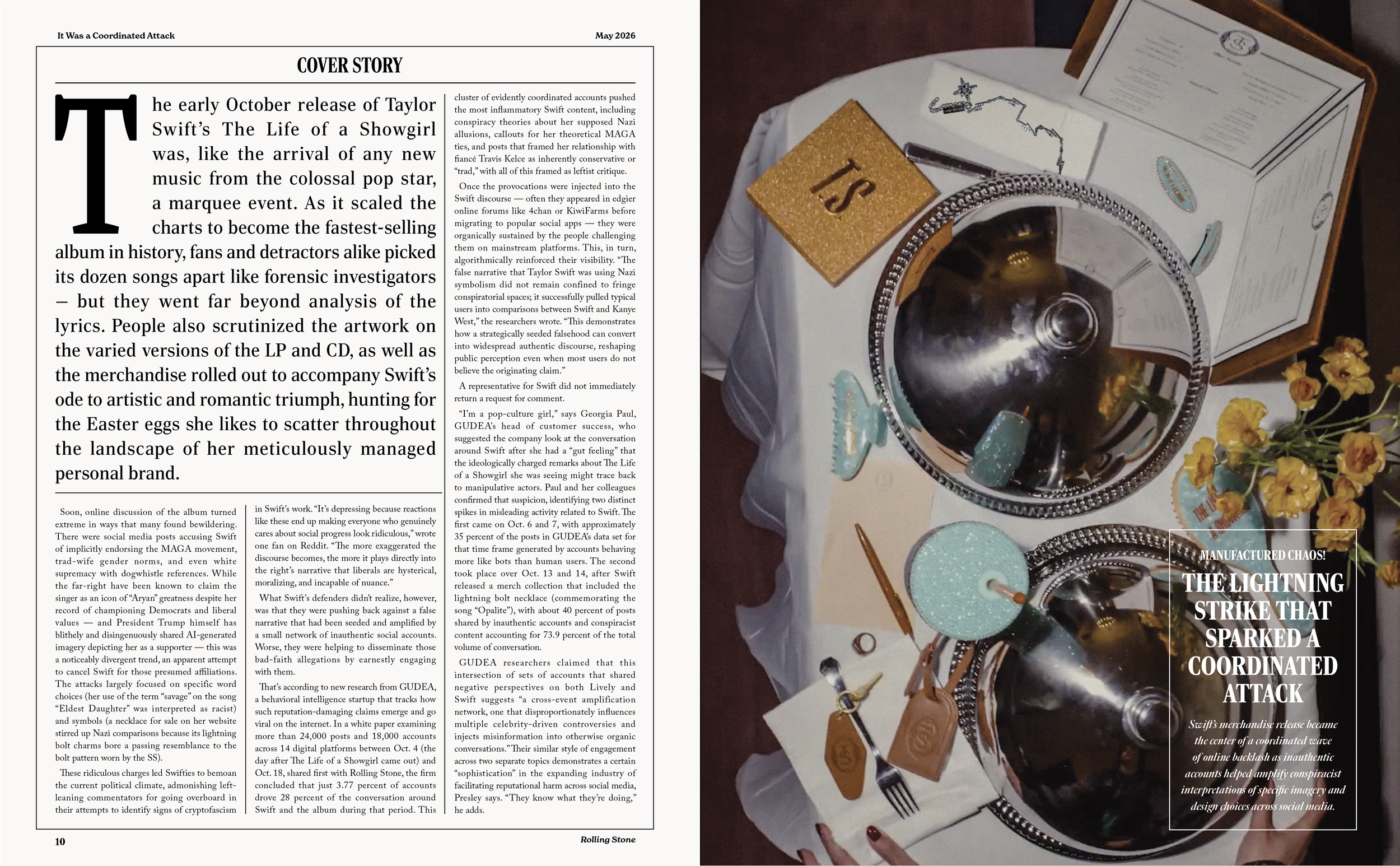
By using the factually proven Taylor Swift smear campaign, Rolling Stone can cover the double standards and the motives behind such campaigns, as well as how they can even impact the world’s most powerful women.
Project Spreads
Fiction
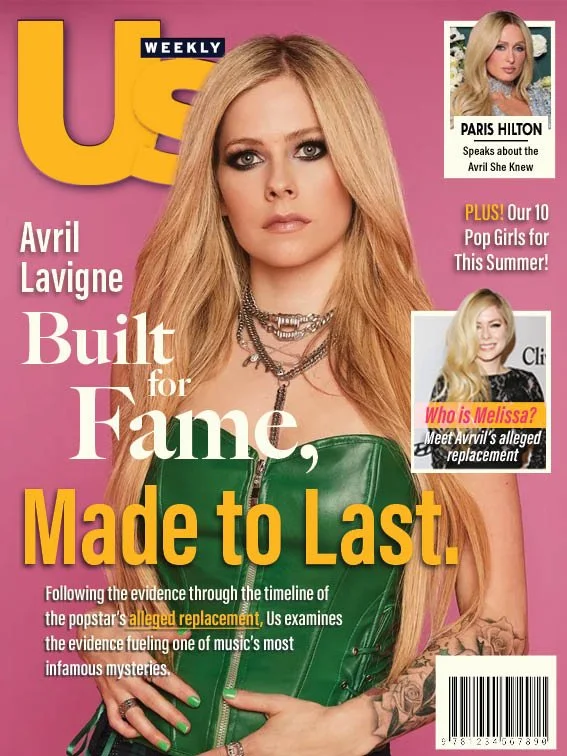
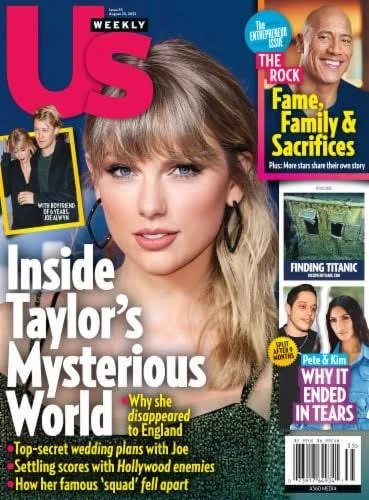
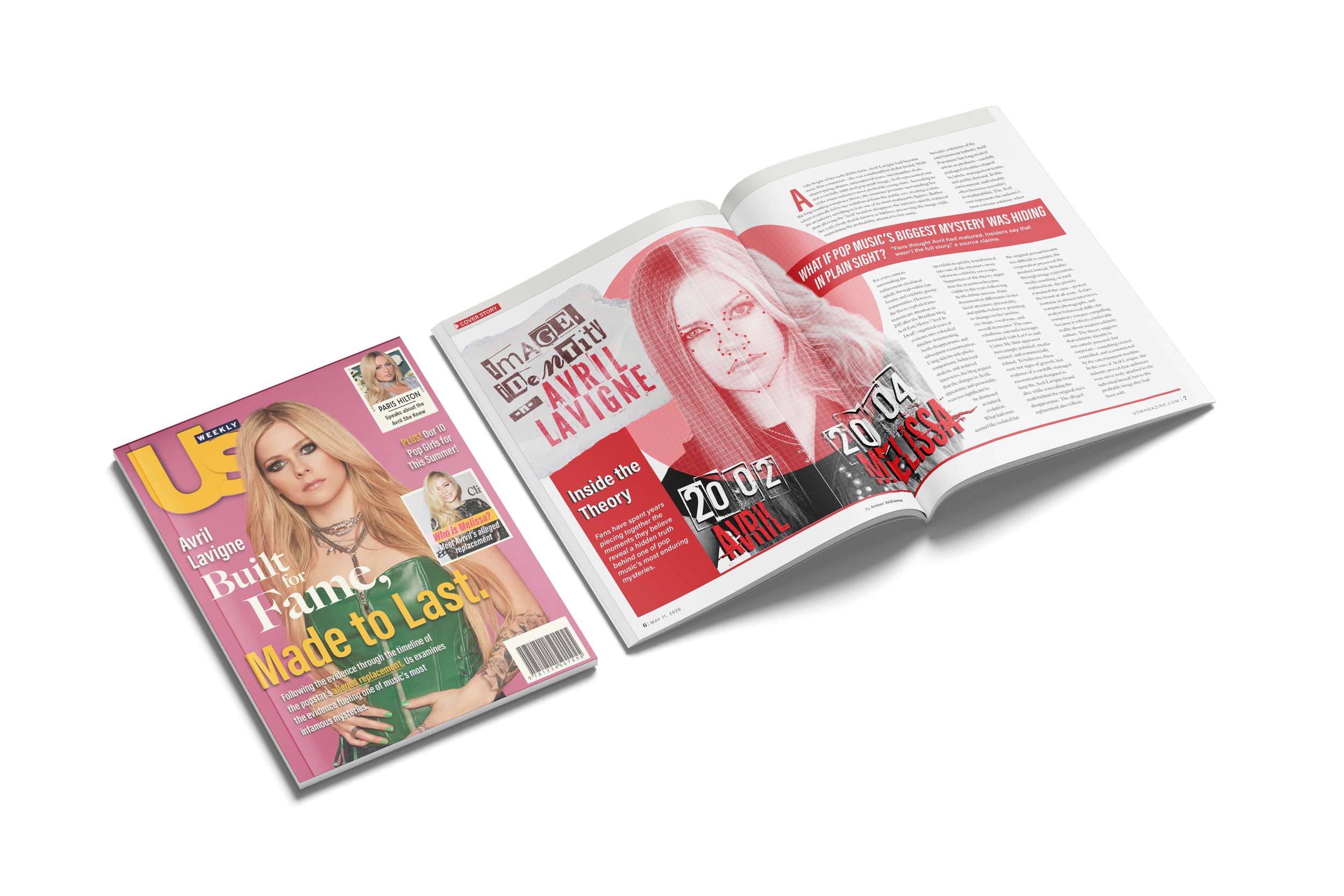
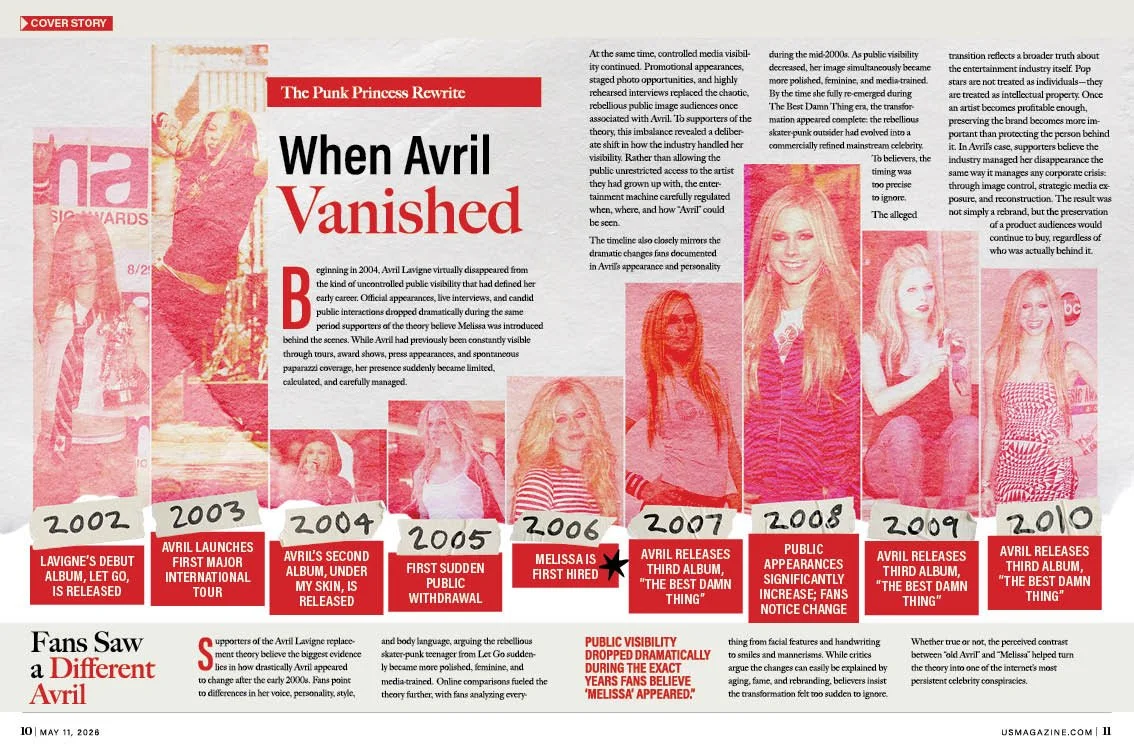
Avril Lavigne Clone Conspiracy Theory
Pushed Narrative
An investigation into Avril Lavigne’s replacement that critiques the music industry’s commodification of celebrity identity.
Design Intention
Show how young female music artists are unfairly targeted by smear campaigns and intense public criticism, encouraging audiences to think more critically about how media, online conversations, and cultural biases shape the way female celebrities are perceived.
Audience
Young (18-30), pop culture-engaged adults interested in celebrity and internet culture, media critique, and the systems that manufacture and maintain public personas.
Desired Behavior Outcome
Encourages viewers to question the authenticity of celebrity personas and reflect on the ways entertainment industries shape, commodify, and preserve public identity for profit..
False Data Used
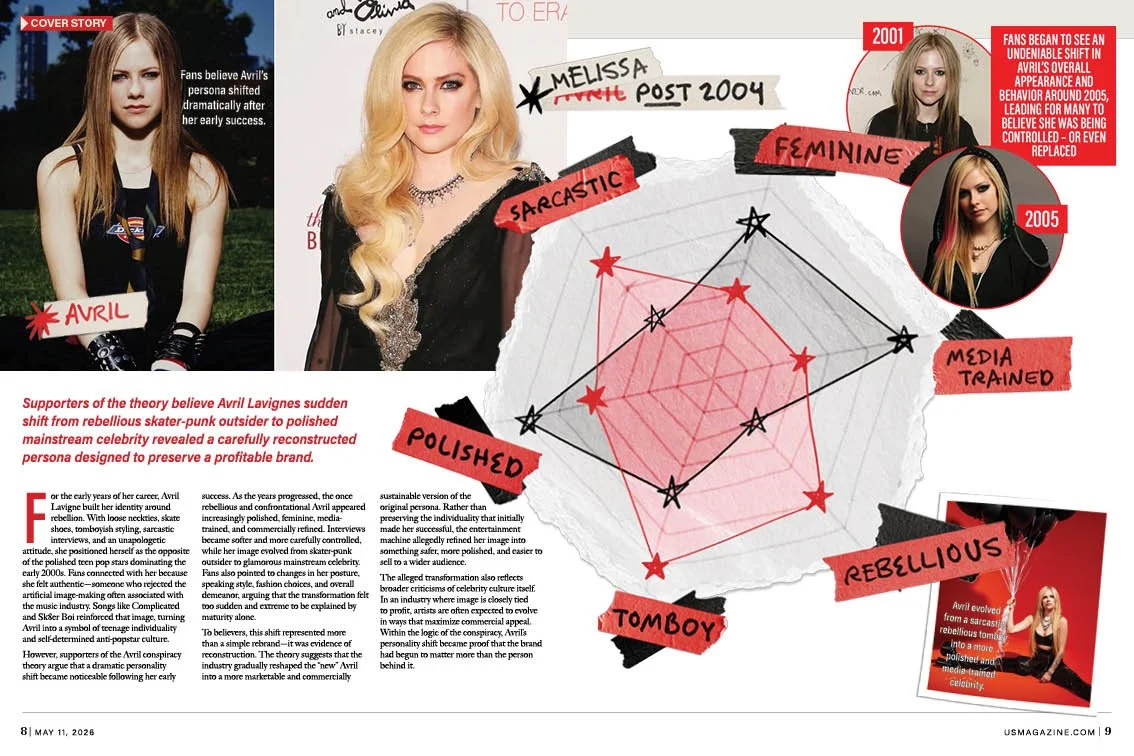
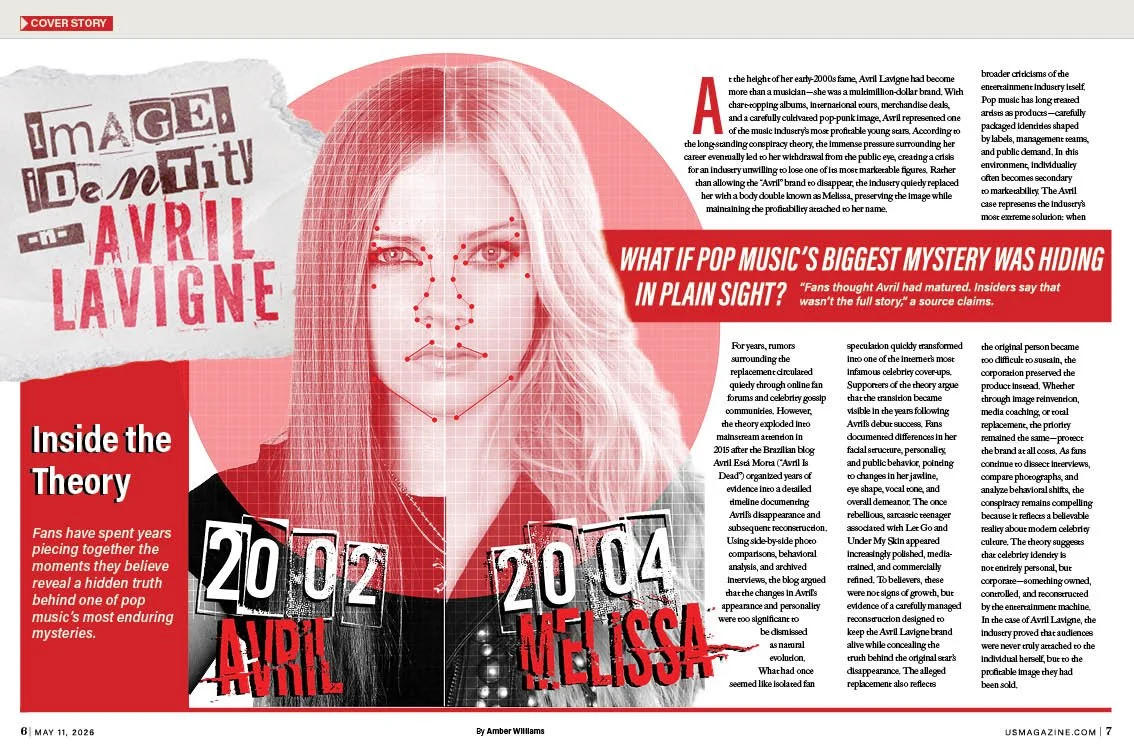
Data Set 1
Facial Feature Analysis and Comparison
Data Set 2
Personality Matrix
Data Set 3
Public Sightings and Career Trajectory Timeline
The purpose of this project was to show an example of how the components of manipulative visual communication can act as ‘proof’ for unsubstantiated material. For this, I covered the popular internet-born conspiracy theory that Avril Lavigne was replaced by a clone which was popularized in the early 2000’s. The following data is completely fabricated information made for the purpose of this project:

Conceptual Narrative
Us Weekly is one of the most recognizable voices in celebrity culture, known for shaping how audiences consume and interpret pop narratives. In recent years, tabloids of the such have tried to shift towards of a more overtly empathetic nature towards women in pop culture due to their previous history of participating in celebrity speculation.
They are also known for taking what some (most) would call frivolous stories and taking them completely seriously – and often trying to pass it off as impact. This would make the perfect place for the conspiracy theory to be covered from a more empathetic light as a critique for the music industry,
Project Spreads
Overseeing Professor:
Project Categories